

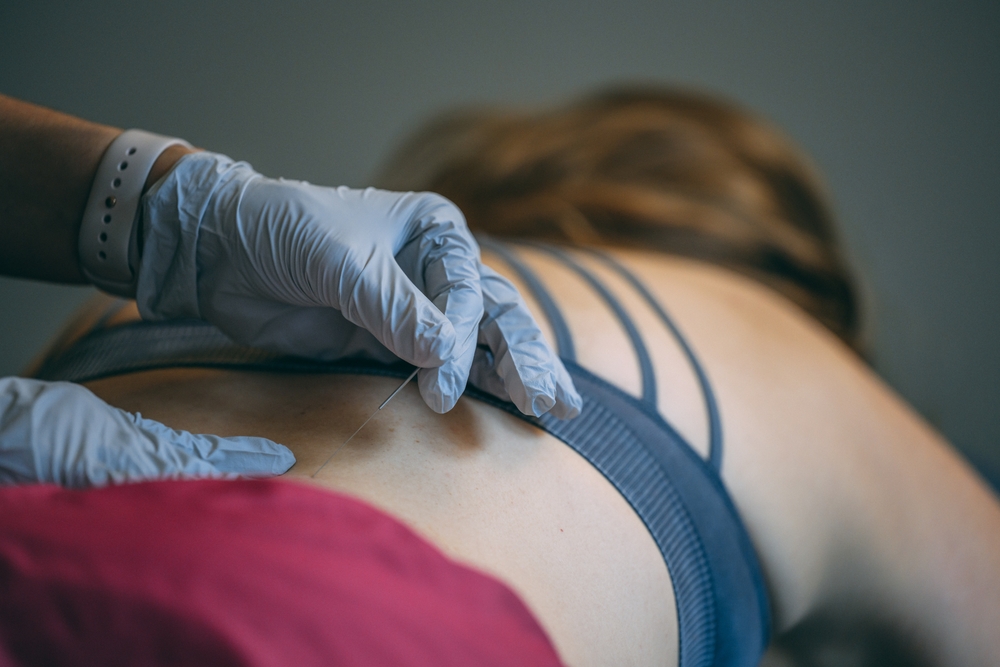
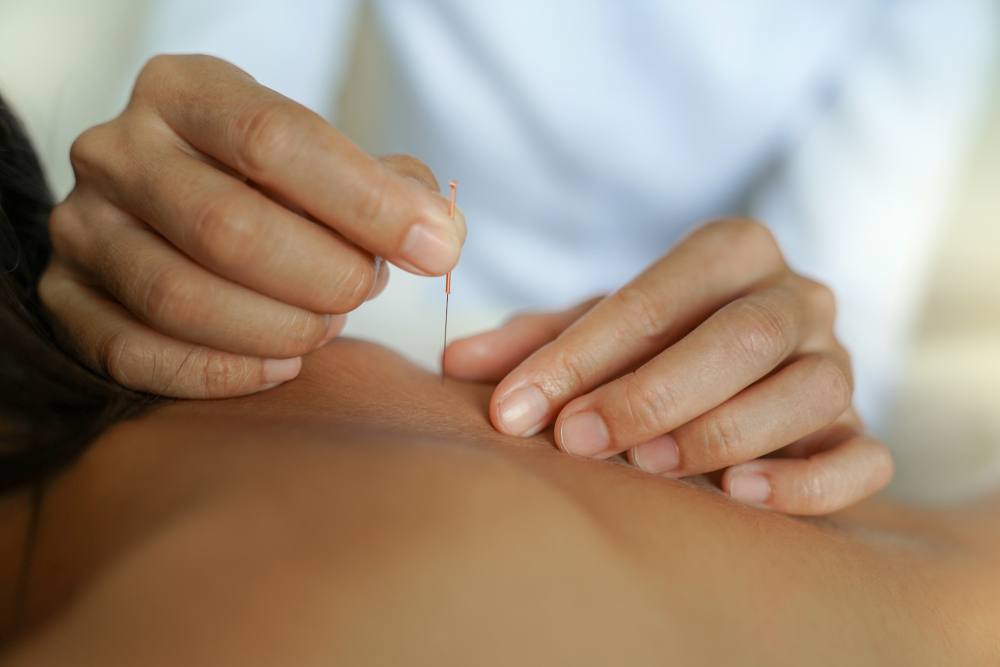
When muscles tighten up or develop painful “knots,” stretching, rest, and massage can only go so far. Dry needling is a safe, physical therapy-based technique that uses a thin, sterile needle to target trigger points, those tight bands of muscle that contribute to pain, stiffness, and restricted movement.
It is not acupuncture. While acupuncture comes from Eastern medicine, dry needling is rooted in modern physical therapy and neuromuscular science. The goal is simple: help the muscle release, improve movement, and support your body’s natural recovery process.

What to Expect With Dry Needling
Step 1 – Evaluation
One of our licensed physical therapists reviews your medical history, symptoms, and movement patterns to understand what is driving your pain.
Step 2 – Trigger Point Assessment
We identify tight bands of muscle, trigger points, and imbalances that may be limiting motion or causing ongoing discomfort.
Step 3 – Targeted Treatment
A thin, sterile needle is inserted into the problem area to create a quick twitch response that helps the muscle release and reset.
Step 4 – Recovery and Follow-Up
Most sessions take only minutes, and dry needling can be combined with the right physical therapy plan to help improve your results over time.
Many patients feel relief quickly, and one of the most common reactions after treatment is: “That wasn’t bad at all… and I feel better already.”
- Shoulder and rotator cuff pain
- IT band syndrome and runner’s knee
- Muscle tightness, trigger points, and chronic tension
- Biceps or Achilles tendinitis
- Headaches, neck pain, and low back pain
- Stiffness or pain that has not improved enough with stretching, rest, or massage
The right diagnosis matters. A physical therapy evaluation helps determine whether dry needling fits safely into your plan of care.
Dry needling is not offered as a one-size-fits-all treatment. It begins with a thoughtful evaluation by one of our licensed physical therapists, who looks at your pain pattern, movement quality, and muscle imbalances before deciding whether dry needling is right for you. When appropriate, it becomes part of a broader physical therapy strategy designed to reduce pain, improve motion, and support long-term recovery.

Dry needling is a physical therapy-based treatment that uses a thin, sterile needle to target trigger points and release painful muscle tension.
No. Acupuncture comes from Eastern medicine, while dry needling is rooted in modern physical therapy and neuromuscular science.
Most patients feel a quick twitch response or brief discomfort in the muscle, followed by a sense of release or improved movement.
Dry needling may help with shoulder pain, rotator cuff issues, tendinitis, IT band syndrome, headaches, neck pain, low back pain, and chronic muscle tightness.
Yes. Your physical therapist will review your history, movement patterns, and trigger points to determine whether dry needling fits safely into your plan of care.