
Most people with back or neck pain don’t start by calling a spine surgeon. In…

Not All Back Pain Comes From the Spine
Sometimes the Problem Isn’t Where It Hurts
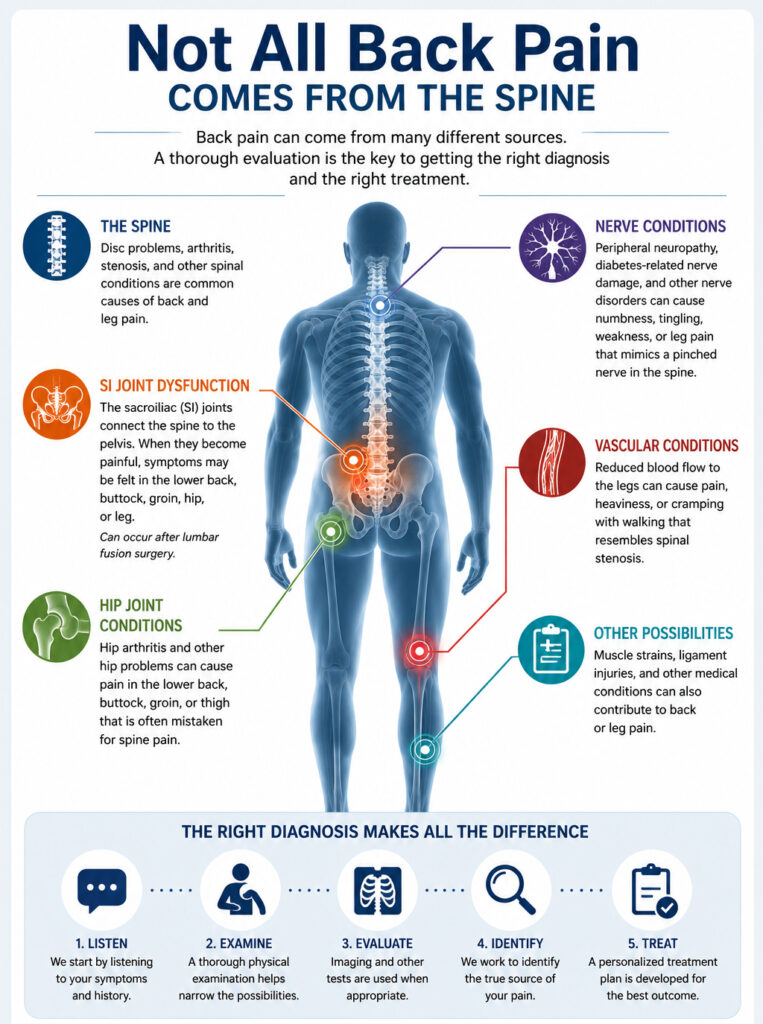
One of the most common misconceptions I see is the assumption that pain in the lower back must be caused by a problem in the lumbar spine. While that is often true, it is far from the only possibility.
The hips, sacroiliac (SI) joints, peripheral nerves, and even vascular conditions can all create symptoms that feel remarkably similar to a spine disorder. Determining the true source of pain is often the most important step in developing an effective treatment plan.
Before deciding how to treat a problem, we first need to be sure we understand what the problem actually is.
Patients are sometimes surprised when I spend as much time talking about what isn’t causing their pain as what is. But a correct diagnosis is the foundation of good treatment.
A Commonly Overlooked Cause of Back Pain: The SI Joint
One of the most common causes of lower back, buttock, hip, or leg pain is dysfunction of the sacroiliac, or SI, joint.
The SI joints connect the spine to the pelvis and help transfer forces between the upper and lower body. When these joints become painful, patients often experience symptoms in the lower back, buttock, groin, hip, or leg. Because those symptoms can closely resemble a disc problem or spinal stenosis, SI joint dysfunction is sometimes mistaken for a lumbar spine condition.
In some patients, SI joint pain can even develop after lumbar fusion surgery, making careful evaluation especially important.
The good news is that when the SI joint is correctly identified as the source of pain, there are effective treatment options available. Depending on the individual patient, treatment may include activity modification, anti-inflammatory medications, physical therapy, injections, or surgical stabilization when necessary.
Hip Arthritis Can Feel Like Back Pain
The hip is another common source of pain that is frequently mistaken for a spine problem.
Patients with hip arthritis often describe pain in the lower back, buttock, groin, or upper thigh. They may have difficulty walking, standing for long periods, or getting in and out of a car. Because the discomfort occurs near the spine, many assume their back is responsible.
In reality, the hip joint may be the true source of the problem. I have seen many patients referred for evaluation of a spinal condition whose symptoms were ultimately traced to hip arthritis. Once the hip was properly treated, the “back pain” improved significantly.
Not Every Nerve Problem Starts in the Spine
Patients often associate numbness, tingling, weakness, or leg pain with a pinched nerve in the back. Sometimes that is exactly what is happening, but peripheral neuropathy, diabetes-related nerve damage, and other nerve disorders can create symptoms that closely resemble spinal nerve compression. The treatments for these conditions are very different, which is why a thorough evaluation is essential.
Sometimes It’s Not Orthopedic at All
Certain vascular conditions can also cause leg pain that resembles spinal stenosis. Patients may develop pain or heaviness in their legs when walking and notice improvement when they stop to rest. While these symptoms can occur with spinal stenosis, they may also result from reduced blood flow to the legs. Because the symptoms overlap, it is important to consider all potential causes before settling on a diagnosis.
The MRI Doesn’t Always Tell the Whole Story
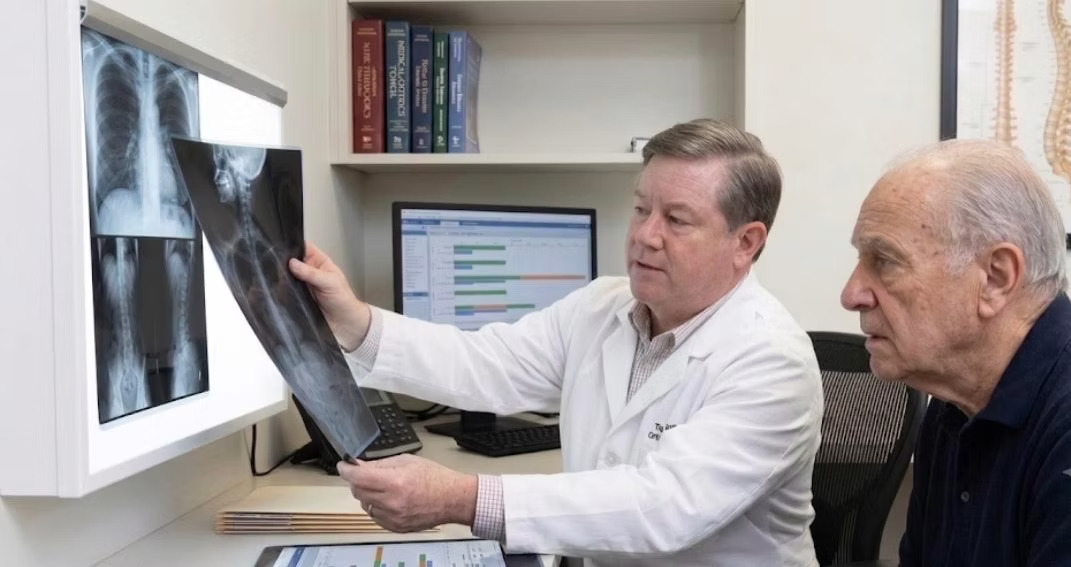
Many patients arrive in my office with an MRI showing a disc bulge, arthritis, stenosis, or degenerative changes. Those findings may be important. But they do not always explain a patient’s symptoms.
As we age, it is common to develop changes in the spine that appear on imaging studies. In fact, many people have abnormalities on MRI and experience little or no pain. The key is making sure the patient’s symptoms, physical examination, and imaging findings all tell the same story. When they do not, it is worth taking a closer look.
Getting the Diagnosis Right
One of the most important parts of spine care is understanding exactly where the pain is coming from. Sometimes the answer is in the spine. Sometimes it is the SI joint, the hip, a nerve disorder, or another medical condition entirely.
Once the source of pain is identified, treatment may range from activity modification, anti-inflammatory medications, and physical therapy to injections or surgery, depending on the diagnosis and the individual patient.
The goal is not to find a reason to operate. The goal is to identify the source of the problem and develop the treatment plan that gives the patient the best opportunity for relief. That is where effective spine care begins.
About Dr. Thomas A. McNally
Dr. Thomas A. McNally is a board-certified orthopaedic spine surgeon specializing in the diagnosis and treatment of cervical, thoracic, and lumbar spine conditions, including minimally invasive and endoscopic spine surgery. He also evaluates and treats sacroiliac joint dysfunction and other conditions that can mimic spinal disorders.
If you are experiencing persistent back, hip, buttock, or leg pain and would like an evaluation, schedule a consultation with Dr. McNally’s office.

Related Posts
Comments (0)