
Most people with back or neck pain don’t start by calling a spine surgeon. In…

Regenerative Peptides and Spine Care: What We Know Today
Where the Science Stands — and Where It’s Going
Patients are hearing more and more about regenerative peptides. They promise to heal discs, reduce pain, accelerate recovery, and even help people avoid spine surgery altogether. Naturally, many patients ask me:
“Could peptides help my back pain?”
At this point, there isn’t enough evidence to answer that question with confidence.
As a spine surgeon, I’m always interested in treatments that may improve outcomes and expand the options available to patients. At the same time, it’s important to distinguish between what has been established through clinical research and what remains under investigation.
What Are Regenerative Peptides?
Peptides are short chains of amino acids that act as signaling molecules throughout the body. Some peptide medications have transformed medicine. For example, GLP-1 medications used to treat diabetes and obesity are peptides supported by strong clinical evidence for approved indications.
The conversation becomes more complicated when we discuss so-called “regenerative peptides.” These therapies are being promoted for their potential effects on tissue repair, inflammation, and recovery. While early research has generated interest, much of the available evidence comes from laboratory and animal studies rather than large human clinical trials.
The Big Picture for Spine Care
At this time, there is no high-quality evidence demonstrating that regenerative peptides can reverse degenerative disc disease, treat spinal stenosis, heal herniated discs, or eliminate the need for surgery.
Many of the claims circulating online simply outpace the science.
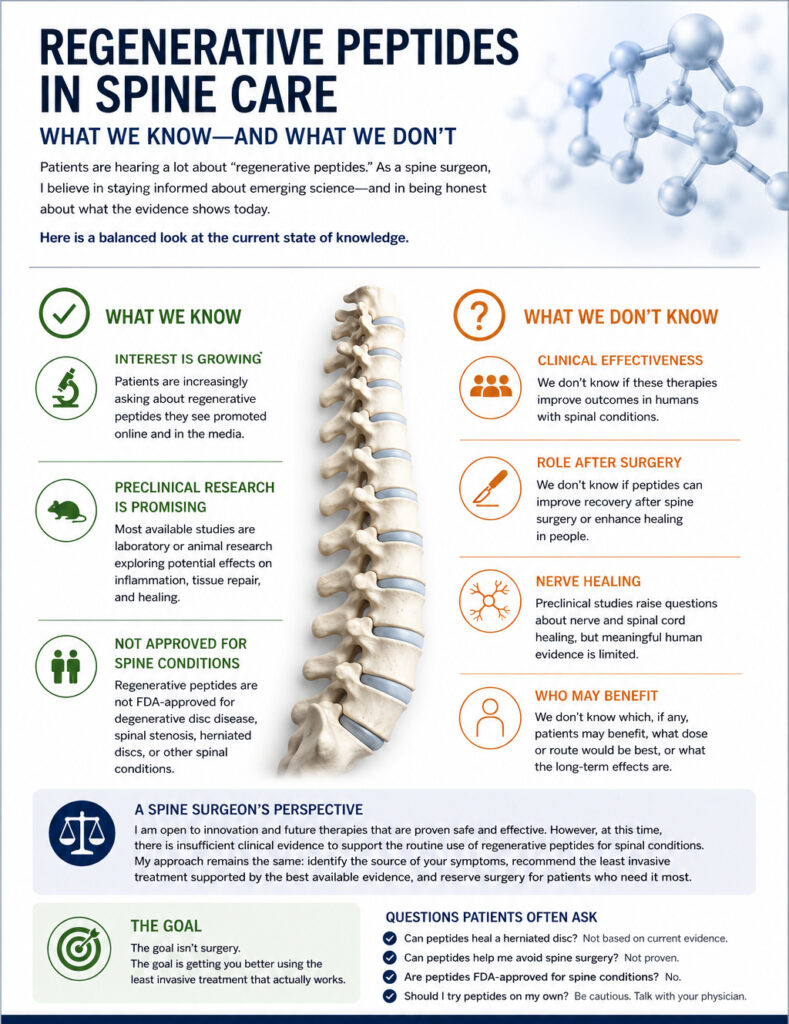
That doesn’t mean these therapies should be dismissed. It means they should be approached thoughtfully and evaluated through the same rigorous standards we apply to any emerging treatment.
Where Peptides May One Day Play a Role
While they are not established treatments for common spinal conditions, researchers continue to explore whether regenerative therapies could have applications in musculoskeletal care.
Post-Operative Healing and Recovery
One area of interest is whether these therapies could eventually support recovery following surgery. Researchers continue to study how biologic therapies may influence inflammation, blood vessel formation, and tissue repair. Whether those findings will translate into meaningful benefits for patients remains unknown.
Soft Tissue Healing Around the Spine
Not all back pain originates from the discs themselves. Muscles, tendons, ligaments, and other supporting structures can contribute to pain and dysfunction. Researchers are exploring whether regenerative approaches may affect the healing of these tissues. Additional clinical research is needed before conclusions can be drawn about their role in patient care.
Nerve Recovery
Another area of ongoing investigation involves nerve healing and recovery. Although preclinical research has raised important questions about whether regenerative therapies could influence these processes, we do not yet know whether those findings translate into meaningful clinical benefit in humans.
The key point is that these possibilities remain areas of investigation rather than established treatment strategies.
Where They Do Not Belong — Yet
I do not currently recommend regenerative peptides as a treatment for degenerative disc disease, spinal stenosis, or herniated discs because we do not have the clinical evidence to support those uses.
Patients deserve clear information about what is known, what remains uncertain, and what still requires further study.
A Spine Surgeon’s Perspective
Patients who come to see me are usually looking for answers to a few important questions: Why am I having pain? What are my options? What is most likely to help me return to the activities that matter to me?
The answer is not the same for everyone. For some patients, the most appropriate next step may be physical therapy, medications, activity modification, or targeted injections. For others, surgery may offer the best opportunity to relieve pain, restore function, and improve quality of life.
The starting point is an accurate diagnosis and a discussion about the expected benefits, limitations, and risks of each option. Treatment decisions should be individualized and based on a patient’s symptoms, goals, and preferences.
The Bottom Line
Regenerative medicine is an evolving field, and there is much we still have to learn. Patients should feel comfortable asking questions about emerging therapies and discussing them openly with their physicians. New treatments deserve careful study, and decisions about care should reflect the best evidence available at the time they are made.
Questions About Your Options?
If you’re experiencing persistent back pain, neck pain, numbness, or weakness — and you’re wondering whether regenerative therapies, conservative treatment, or surgery might be appropriate for your situation — schedule a consultation with Dr. McNally’s office.
Dr. Thomas A. McNally is a Board-Certified Orthopaedic Spine Surgeon and Dual Fellowship Trained in Spine Surgery. He is part of Midwest Sports Medicine and sees patients at locations in Chicago and Elk Grove Village. Phone: 847-437-9889.
This article is intended for educational purposes only and should not be considered medical advice. Treatment decisions should be individualized and made in consultation with your physician.

Related Posts
Comments (0)